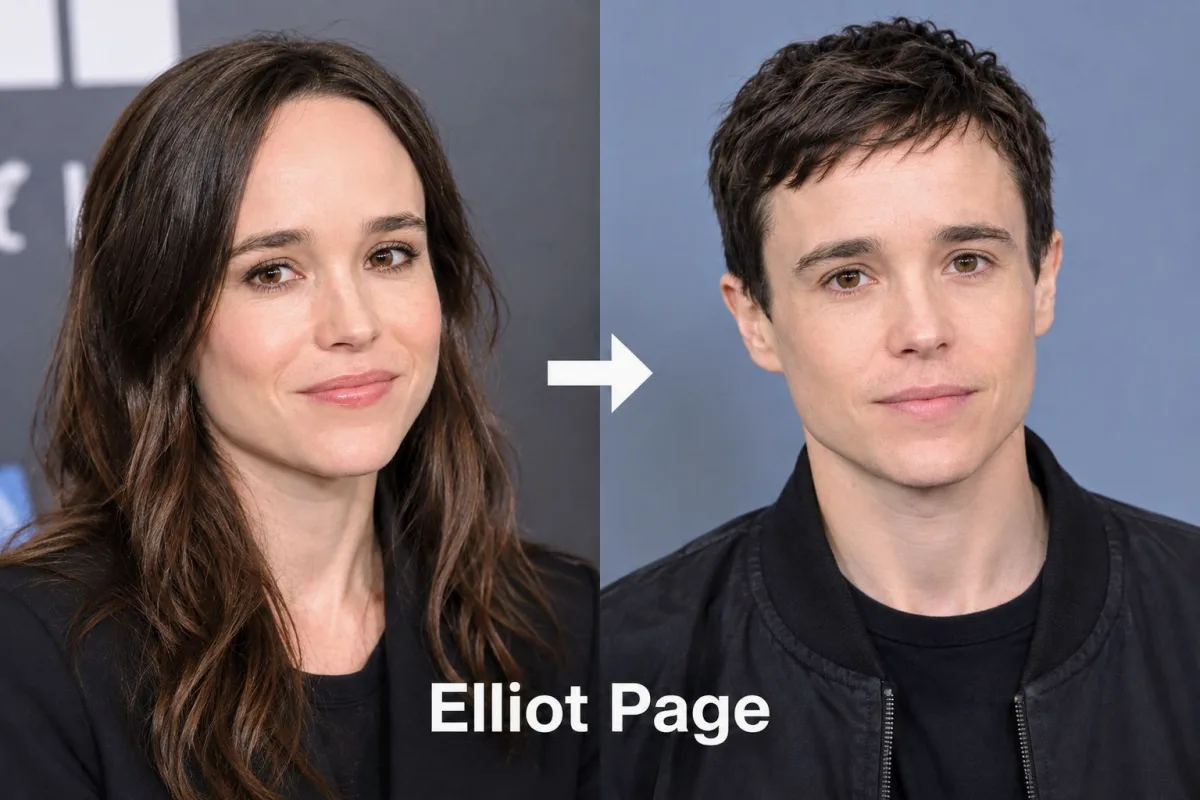
Transformation of the casting category and ruthless competition
In the first phase of his career, Elliot Page worked as a young, extraordinarily talented, and visually striking woman. The Hollywood market has a constant demand for young actresses – they are cast in roles of daughters, teenage heroines, and female leads in romances or dramas. In this category, there was relatively broad space and less direct competition for a talented actress with a distinctive charisma.
However, with the transition, the situation changed fundamentally. Elliot Page entered the market for male roles, where a completely different dynamic and massive saturation prevail. As a man around forty years old, he now competes for roles with thousands of established actors who have a long-standing position in this segment and a clearly defined typological profile.
Main reasons why offers do not come automatically
The film industry, especially the commercial one, operates on very quick casting typologies. Producers and directors look for specific archetypes for their characters. Why does Elliot Page face a harder position in his new role?
- Loss of the original unique profile: As a young woman, Page represented a very specific character type in the market that was in demand by both audiences and creators.
- Saturation in the male roles category: There is a surplus of middle-aged male actors, and the supply of quality roles for this age group is not enough to meet demand.
- Caution from major studios: High-budget Hollywood blockbusters often avoid casting actors whose personal stories they feel might overshadow the movie character itself or divide the audience.
- Shift from mainstream to independent film: While smaller indie projects provide creative freedom, they do not generate as much visibility as studio blockbusters.
- Youth and beauty: It is easy for young, beautiful actresses to get roles. For a man, just being good-looking is not enough to land a role.
The future and finding a new place on the cinematic map
The idea that a successful pre-transition career automatically guarantees the same supply of roles afterwards proves unrealistic in the Hollywood environment. The film industry rarely operates on past merits; the key factor is current commercial viability and how easily an actor can be fitted into existing scripts.
Elliot Page now faces the challenge of creating a completely new acting identity. The path to further major roles will likely not lead through traditional auditions for typical male protagonists, but rather through creative authorship, producing his own projects, and collaborating with independent directors who can utilize his talent in non-traditional contexts.